

Zhibo8 leverages Qoder CN to enhance its AI-assisted collaborative development, overcome efficiency bottlenecks, and improve code quality.
Since its founding in 2007, Zhibo8 has been a leader in sports event broadcasting and information services. As a well-known sports broadcasting and information platform in China, Zhibo8's mission is to make it easier for sports fans to obtain event information and watch live streams. Through its app, website, and other channels, Zhibo8 provides comprehensive services such as live sports broadcasts, news, and data analytics. These services cover a wide range of sports, such as football, basketball, tennis, and esports, bringing the digital sports experience to users.
 Zhibo8 has built strong user loyalty by attracting many sports fans to communicate and discuss events on its platform. The platform has over 250 million users, with its app exceeding 50 million monthly active users and 13 million daily active users. Its user loyalty and popularity have led the industry for many years.
Zhibo8 also continuously improves its platform performance and user experience through IT investment and strategy. This includes research and development (R&D) and innovation, a mobile-first focus, system architecture optimization, data security and privacy protection, content integration and copyright management, and community interaction. These efforts help solidify its leading position in the sports broadcasting and information services industry.
Zhibo8 has built strong user loyalty by attracting many sports fans to communicate and discuss events on its platform. The platform has over 250 million users, with its app exceeding 50 million monthly active users and 13 million daily active users. Its user loyalty and popularity have led the industry for many years.
Zhibo8 also continuously improves its platform performance and user experience through IT investment and strategy. This includes research and development (R&D) and innovation, a mobile-first focus, system architecture optimization, data security and privacy protection, content integration and copyright management, and community interaction. These efforts help solidify its leading position in the sports broadcasting and information services industry.
As a top sports broadcasting platform in China, Zhibo8's development team supports frequent business iterations and technical optimizations for high-concurrency scenarios. The team had previously used ChatGPT for technical Q&A and code snippet generation. They also allowed team members to choose their own AI coding assistants. However, this approach led to several pain points:
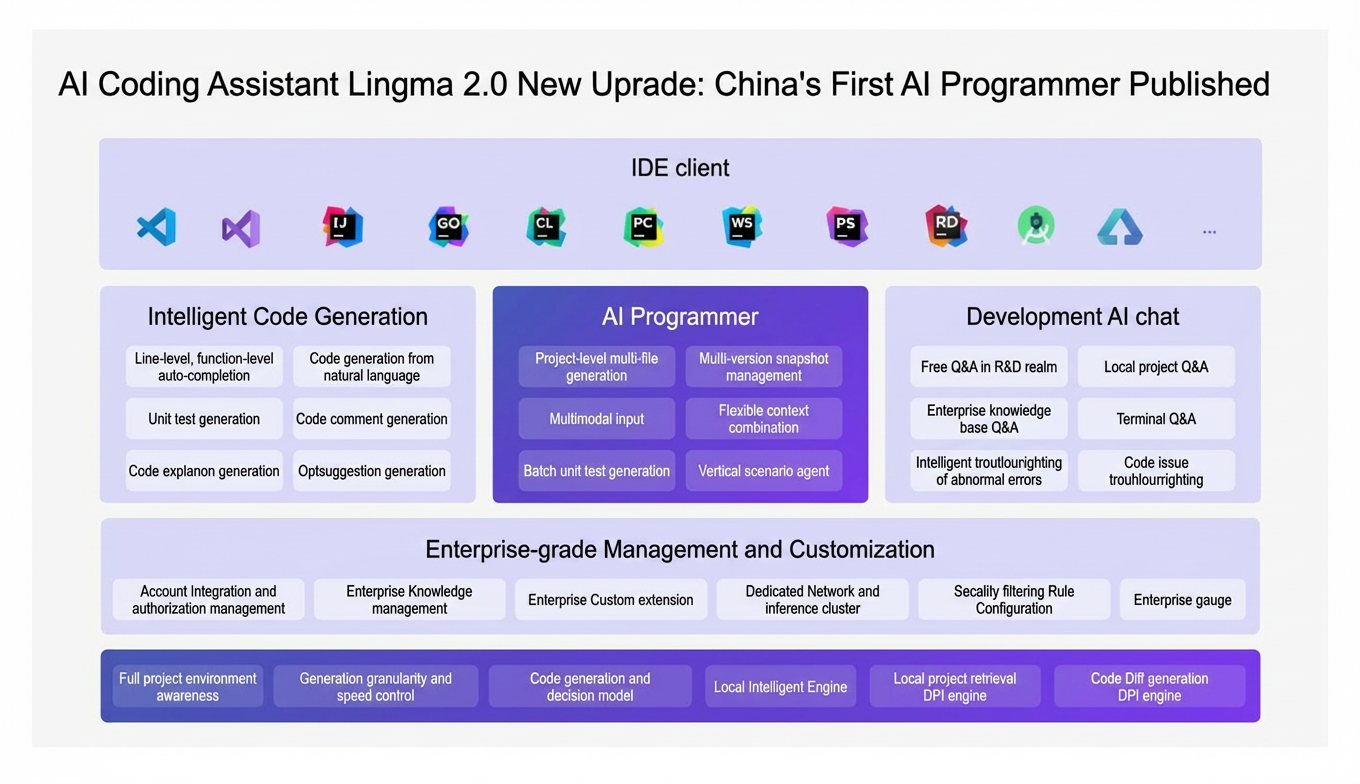
Zhibo8 chose to adopt Qoder CN Enterprise Dedicated Edition to address its pain points related to R&D efficiency, code quality, knowledge management, and data security.
Zhibo8 achieved significant improvements in both efficiency and quality after adopting Qoder CN.
Choosing tools in the era of large models
As a top sports broadcasting platform in China, Zhibo8's development team supports frequent business iterations and technical optimizations for high-concurrency scenarios. The team had previously used ChatGPT for technical Q&A and code snippet generation. They also allowed team members to choose their own AI coding assistants. However, this approach led to several pain points:
- Low development assistance efficiency
- Poor business adaptation
- Lack of efficiency metrics
Address your pain points, choose Qoder CN
Zhibo8 chose to adopt Qoder CN Enterprise Dedicated Edition to address its pain points related to R&D efficiency, code quality, knowledge management, and data security.
- Seamless integration for an upgraded developer experience
- Adherence to enterprise-level code standards
- End-to-end AI assistance for complex scenarios
Actual results
Zhibo8 achieved significant improvements in both efficiency and quality after adopting Qoder CN.
- Boosted development efficiency: The Qoder CN AI coding assistant provides features such as code completion, multi-file code modification, and autonomous task execution. These features helped the team save approximately 30% of their coding time on standard feature development and increased the efficiency of unit test generation for complex modules, such as real-time data synchronization, by 30%.
- Improved code quality: Code that adhered to company standards increased the first-pass rate by 35%. Comment coverage rose from 30% to over 70%.
- Faster knowledge onboarding: With the code explanation and flowchart generation features of Qoder CN, new team members could quickly understand the legacy system architecture, which shortened their training period by 30%.