

Fudian Bank leveraged digital transformation and Large Language Model (LLM) technology to implement intelligent R&D management. This initiative improved coding efficiency, code quality, and maintainability, while also increasing R&D asset utilization. The bank plans to continue advancing its intelligent processes.
With a century of heritage, Fudian Bank is one of the first Chinese financial enterprises to expand globally. The bank has a rich history of promoting market growth, supporting rural revitalization, boosting local economic development, and maintaining financial stability.
In recent years, Fudian Bank has aimed to become a leading digital bank in its region, using digital technology to achieve high-quality growth in scale, quality, and efficiency. Since launching its digital transformation in May 2021, the bank's "Dianfeng Plan" has won 18 major awards. These awards recognize its innovative models, digital maturity, market influence, and social value in areas such as financial innovation, mobile banking, cloud computing, big data, and ESG. The plan has also been featured in several prominent digital transformation case studies in China.
From digital to intelligent
From digital to intelligent R&D management
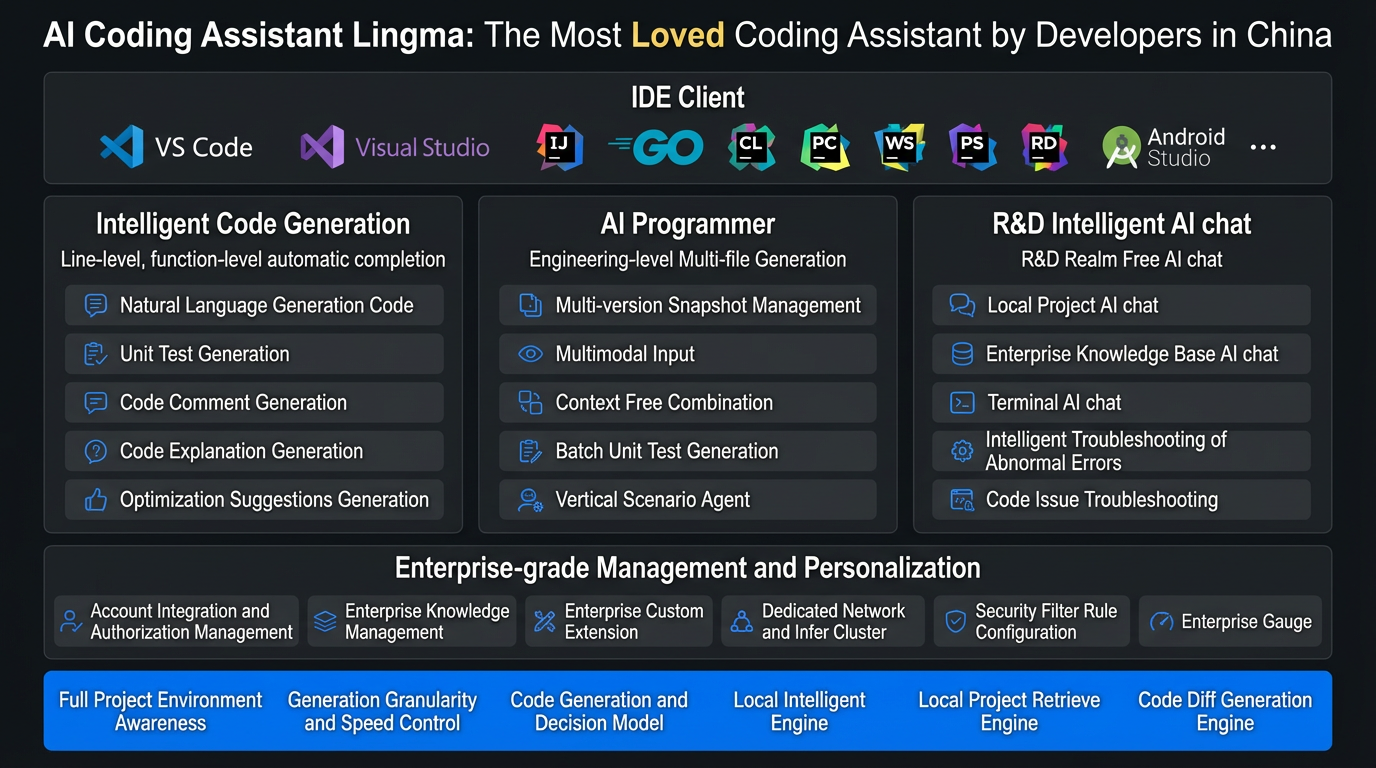
In the digital era, Fudian Bank has become a benchmark for transformation among city commercial banks in China. With the rise of AI-Generated Content (AIGC) and Large Language Model (LLM) technology, software engineering has entered a new era of intelligent, LLM-driven development. As a pioneer in digital transformation for city commercial banks, Fudian Bank continues to innovate. The bank has adopted LLM-assisted R&D technologies and developed a next-generation intelligent R&D solution tailored to its technology stack and development processes.
Fudian Bank aimed to achieve the following four outcomes:
 The implementation plan was divided into three phases:
Phase 1: Software delivery
Develop a detailed resource and deployment plan based on your existing internal resources and the expected number of users.
Using Qoder CN's mature and standardized deployment process, the system was deployed and went live within 3 days. It is compatible with various graphics cards and can be scaled out flexibly based on the number of users.
At the start of the project, graphics card resources were limited. The Qoder CN team optimized the model parameter size, precision, services, and plugins to deliver an end-to-end process. The optimized solution was successfully rolled out to the pilot team.
Phase 2: Pilot installation
After the platform went live, developers could install the IDE plugin to use the intelligent coding features.
After a week of independent use, the bank organized advanced product training and best practice sharing sessions. These sessions provided developers with a deep understanding of how to use the intelligent coding tool efficiently.
The pilot team integrated the tool into their daily development projects, making full use of Qoder CN's capabilities. The Qoder CN technical service team promptly responded to and resolved any issues or optimization requests.
A major version upgrade for the Qoder CN platform is released each month. The customer deploys upgrades as needed.
Phase 3: ISV rollout
During the project, the bank conducted group training for its Independent Software Vendor (ISV) partners. This training facilitated a quick installation and rollout for all developers. The Qoder CN product support and on-site delivery teams provided comprehensive support to ensure that ISV developers and testers used Qoder CN efficiently.
Initial results
After several months of continuous optimization and product capability iterations for Qoder CN, its popularity among internal users has increased steadily. AI code generation now accounts for over 30% of new code, unit test coverage has increased steadily, and no major failures occurred during this period. Technical staff have developed the habit of using Qoder CN for coding and R&D Q&A. This has further advanced the intelligent transformation of software development.
Next steps for intelligent R&D management
Fudian Bank uses the enterprise knowledge base feature in the Qoder CN platform to leverage its R&D specification documents and code sample libraries. This improves code standardization and reduces redundant development. It also increases the proportion of AI-generated code and improves the accuracy of R&D Q&A.
In the future, Fudian Bank plans to upgrade from an intelligent coding assistant to a fully intelligent R&D system. This system will include features such as intelligent code reviews, automatic test case generation, and intelligent resolution of build and deployment issues. These enhancements will further advance the bank's intelligent R&D management.
The implementation plan was divided into three phases:
Phase 1: Software delivery
Develop a detailed resource and deployment plan based on your existing internal resources and the expected number of users.
Using Qoder CN's mature and standardized deployment process, the system was deployed and went live within 3 days. It is compatible with various graphics cards and can be scaled out flexibly based on the number of users.
At the start of the project, graphics card resources were limited. The Qoder CN team optimized the model parameter size, precision, services, and plugins to deliver an end-to-end process. The optimized solution was successfully rolled out to the pilot team.
Phase 2: Pilot installation
After the platform went live, developers could install the IDE plugin to use the intelligent coding features.
After a week of independent use, the bank organized advanced product training and best practice sharing sessions. These sessions provided developers with a deep understanding of how to use the intelligent coding tool efficiently.
The pilot team integrated the tool into their daily development projects, making full use of Qoder CN's capabilities. The Qoder CN technical service team promptly responded to and resolved any issues or optimization requests.
A major version upgrade for the Qoder CN platform is released each month. The customer deploys upgrades as needed.
Phase 3: ISV rollout
During the project, the bank conducted group training for its Independent Software Vendor (ISV) partners. This training facilitated a quick installation and rollout for all developers. The Qoder CN product support and on-site delivery teams provided comprehensive support to ensure that ISV developers and testers used Qoder CN efficiently.
Initial results
After several months of continuous optimization and product capability iterations for Qoder CN, its popularity among internal users has increased steadily. AI code generation now accounts for over 30% of new code, unit test coverage has increased steadily, and no major failures occurred during this period. Technical staff have developed the habit of using Qoder CN for coding and R&D Q&A. This has further advanced the intelligent transformation of software development.
Next steps for intelligent R&D management
Fudian Bank uses the enterprise knowledge base feature in the Qoder CN platform to leverage its R&D specification documents and code sample libraries. This improves code standardization and reduces redundant development. It also increases the proportion of AI-generated code and improves the accuracy of R&D Q&A.
In the future, Fudian Bank plans to upgrade from an intelligent coding assistant to a fully intelligent R&D system. This system will include features such as intelligent code reviews, automatic test case generation, and intelligent resolution of build and deployment issues. These enhancements will further advance the bank's intelligent R&D management.
- Improve coding efficiency: Use a large code model for assisted programming to significantly boost developer productivity.
- Enhance code quality: Shift quality control left using AI to automatically generate unit tests, which significantly improves code quality.
- Optimize code readability and maintainability: Use the LLM to automatically generate comments and optimize code. This improves code readability, reduces potential risks, and simplifies future software maintenance.
- Revitalize R&D assets: Leverage the specification documents and code sample libraries accumulated during digital transformation. This improves code standardization, reduces redundant development, and further boosts R&D efficiency.